Step-by-Step Guide to Prepare Any-night-of-the-week Simple is Best! Soft and Creamy Deep-Fried Taro Roots in Sauce (Agedashi)
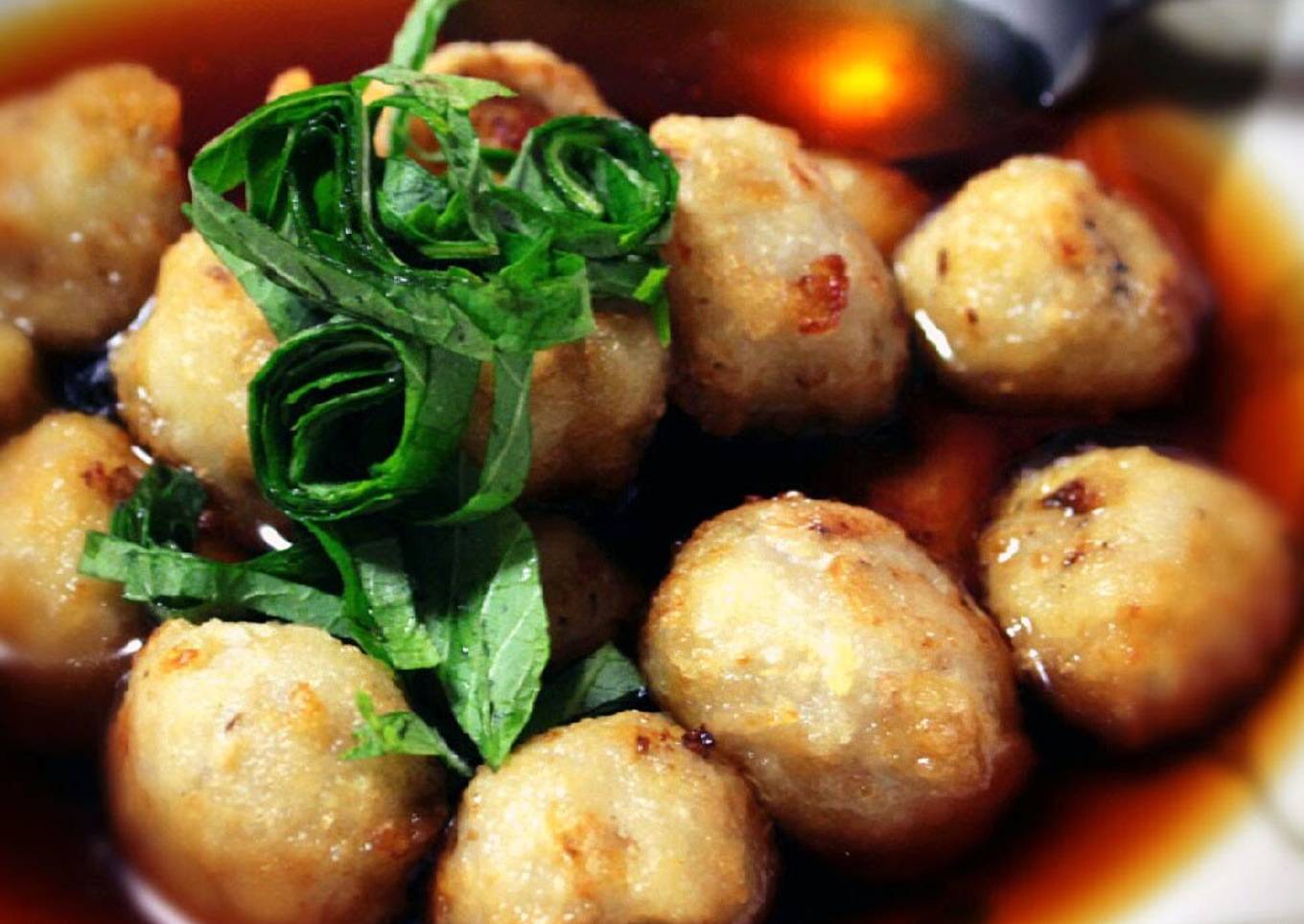
Hello everybody, I hope you are having an amazing day today. Today, I'm gonna show you how to make a distinctive dish, Simple Way to Prepare Any-night-of-the-week Simple is Best! Soft and Creamy Deep-Fried Taro Roots in Sauce (Agedashi). One of my favorites. This time, I'm gonna make it a little bit unique. This is gonna smell and look delicious.
When it comes to cooking, it's very important to keep in mind that everybody else started somewhere. I do not know of one person who was born with a wooden cooking spoon and ready to go. There's a good deal of learning which must be carried out as a way to be a prolific cook and there is obviously room for improvement. Not only can you will need to begin with the basics when it comes to cooking however you nearly need to start when understanding how to cook a new cuisine such as Chinese, Chinese, Thai, or Indian food.
The same is true for lunches whenever we usually resort to your can of soup or box of macaroni and cheese or any other similar product instead of putting our creative efforts into producing an instant and easy yet delicious lunch. You will see many thoughts in this article and the hope is that these thoughts will not only enable you to get off to a wonderful beginning for ending the lunch R-UT most of us look for ourselves in at any point or another but and to use new things all on your very own.
The first thing which you have to learn is what the different terminology you will find in recipes actually means. There are lots of brand new and at times foreign sounding terms that you may see in common recipes. These terms can mean that the gap in recipe success or failure. You ought to be able to detect a fantastic section in virtually any inclusive cookbook that explains the different definitions for unknown terminology. If you aren't absolutely certain what's meant with"folding at the eggs" it really is in your interests to look this up.
Many things affect the quality of taste from Simple is Best! Soft and Creamy Deep-Fried Taro Roots in Sauce (Agedashi), starting from the type of ingredients, then the selection of fresh ingredients, the ability to cut dishes to how to make and serve them. Don't worry if you want to prepare Simple is Best! Soft and Creamy Deep-Fried Taro Roots in Sauce (Agedashi) delicious at home, because if you already know the trick then this dish can be used as an extraordinary special treat.
As for the number of servings that can be served to make Simple is Best! Soft and Creamy Deep-Fried Taro Roots in Sauce (Agedashi) is 2 servings. So make sure this portion is enough to serve for yourself and your beloved family.
To get started with this particular recipe, we have to prepare a few ingredients. You can cook Simple is Best! Soft and Creamy Deep-Fried Taro Roots in Sauce (Agedashi) using 11 ingredients and 7 steps. Here is how you can achieve that.
I make this whenever taro root are in season. The rich sauce really whets your appetite ♪
■It's easy to boil taro root, but if you overcook them in the microwave, they'll become hard, so keep an eye on them while cooking.
■Taro root has properties that strengthen the mucous membranes in your stomach, and are rich in mucin, which is good for your immune system. They are also packed with potassium and fiber, and surprisingly protein-rich ♪ Recipe by pogue
Ingredients and spices that need to be Prepare to make Simple is Best! Soft and Creamy Deep-Fried Taro Roots in Sauce (Agedashi):
- 20 Taro root, small
- 1 tbsp each Flour + katakuriko
- 50 ml ☆Mentsuyu
- 50 ml ☆Mirin
- 50 ml ☆Dashi stock (or 1/4 cup water + 2 tablespoons sake)
- 1 Shiso leaves, green onion, ginger, grated daikon radish, or other condiments of your choice.
- Sauce recipe without mentsuyu:
- 3 tbsp ★Soy sauce
- 3 tbsp ★Mirin
- 2 tbsp ★Sugar
- 50 ml ★Dashi stock (or 1/4 cup water + 2 tablespoons sake)
Steps to make Simple is Best! Soft and Creamy Deep-Fried Taro Roots in Sauce (Agedashi)
- Boil the taro roots without removing the skin (until a bamboo skewer goes through easily). Alternatively, wrap in plastic and microwave for 4-5 minutes until tender.
- Put the cooked taro roots in water while they are still hot, and slip off the skin. (The skin comes off very easily, so you could get your kids to help out here and have fun.)
- While the taro roots are still warm, add 2 teaspoon of mentsuyu (not listed) to flavor. Put the taro roots in a plastic bag with the flour and katakuriko.

- Holding the bag closed with your hands, shake the bag to coat the taro roots in the flour. Put the ☆ or ★ sauce ingredients in a heatproof container, and heat in the microwave just before it comes to a boil.
- Deep fry the taro roots in 180 °C oil until crispy on the outside. Before you remove them, reduce the temperature of the oil to cook the surface to a crispy golden finish.
- Drain the oil. Put the hot taro roots in the Step 5 sauce. Serve with shiso leaves or grated ginger ♪ Chopped green onions and grated daikon radish go well with them, too!

- Taro roots strengthen the mucous membranes in your stomach, and are rich in mucin, which is good for your immune system. It's also rich in protein. Taro roots were a valuable source of protein in the days before meat was eaten in Japan.
While this is in no way the end all be guide to cooking fast and simple lunches it's excellent food for thought. The expectation is that will get your own creative juices flowing so that you can prepare wonderful lunches for your own family without the need to accomplish too terribly much heavy cooking through the practice.
So that's going to wrap this up with this exceptional food Recipe of Award-winning Simple is Best! Soft and Creamy Deep-Fried Taro Roots in Sauce (Agedashi). Thank you very much for reading. I'm sure you will make this at home. There's gonna be more interesting food at home recipes coming up. Remember to bookmark this page on your browser, and share it to your loved ones, friends and colleague. Thank you for reading. Go on get cooking!
)
Post a Comment for "Step-by-Step Guide to Prepare Any-night-of-the-week Simple is Best! Soft and Creamy Deep-Fried Taro Roots in Sauce (Agedashi)"